
The government is drawing up a relief package for industry with steps such as relaxation of asset-classification norms by banks, thus allowing companies to delay the repayment of loans, and tax holidays for the worst-hit sectors like aviation and hospitality. But it might not be enough to stop more bankruptcies from getting filed.

Companies will have to follow all requirements laid out under rules for holding board meetings via video conferencing such as recording of these proceedings, ensuring availability of proper equipment among others.

The government is also planning to set up specialised Benches for competition law to reduce the burden of the appellate tribunal, which is referred to on all matters from company law and IBC to competition law and the national financial reporting authority.

Under the Vivad se Vishwas scheme, the MNCs will have to bring in disputed amount to India, else, the entire money will be considered as loan from subsidiaries on which interest will have to be paid.

The mop-up could have been much higher, but tax on imports fell 2 per cent y-o-y.

With auditing under the scanner and two of the Big Four firms stopping non-audit services for audit clients, auditors will now be subjected to a more stringent standard of reporting.

The new web form would facilitate on-screen filing and real time data validation for seamless incorporation.

Deloitte India would not provide non-audit services to all listed companies and other entities where public money is involved such as banks and insurance companies, if they are its audit clients.

The panel may include or seek inputs from former RBI Governor Urjit Patel, former chief economic advisor Arvind Subramanian, Sajjid Chinoy of the PM-EAC, Rathin Roy, among others.

The ministry said it was an anti-abuse provision amid growing instances of NRIs shifting their stay in low or no-tax jurisdiction to avoid tax payment in India.

Finance Minister Nirmala Sitharaman has brought down the budgetary allocation for the fertiliser subsidy for FY21 to Rs 71,309 crore, from the RE of Rs 79,998 crore for FY20, while increasing food subsidy to FCI through "ways and means advance" to Rs 50,000 crore for FY21, from Rs 36,000 crore in RE for FY20, and under the National Food Security Act (NFSA) to Rs 77,982 crore, from Rs 75,000 crore.

The numbers become all the more important because actual tax collections fell short by Rs 1.91 trillion compared to what was projected in 2018-19. Besides, the Budget for FY20 did not give actual figures for 2018-19, but the revised numbers given in the interim Budget.

What seems to have changed over the last two-three years is that earlier the CCI considered online as another channel for retail sales, while it now seems dividing the retail market into two -- online and offline, and looking at them separately, say competition law experts.

'I suggest a cut in the GST rates and an infusion of Rs 1.2 trillion into the economy in six months.'

The warning by the anti-trust watchdog has come days ahead of Amazon founder Jeff Bezos' India visit, about which the Seattle-headquartered company has been tight-lipped. Sources in the know indicated that Bezos, coming on a short trip, has sought a meeting with Prime Minister Narendra Modi.

Measures that quickly boost demand and increase employment are needed to push up growth. Moreover, without announcing new planss, the government should strengthen schemes such as PM KISAN, MNREGA and programmes to build rural roads.

The states that witnessed high CPI-based inflation rates were Lakshadweep, Tripura, Odisha, Uttar Pradesh, Kerala, Madhya Pradesh, Puducherry, Tamil Nadu, Rajasthan, Manipur and Mizoram.
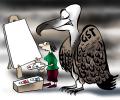
E-invoicing would be implemented on a voluntary basis by those having an annual turnover of above Rs 500 crore from January 1.

To propel demand, one should concentrate on indirect taxes and bring down the goods and services tax (GST) rates to a uniform 12 per cent as the Vijay Kelkar panel had recommended, said Ajit Ranade, chief economist at Aditya Birla Group.

The new restriction will be challenging for businesses, as they will have to do regular follow-ups with their suppliers.
 © 2025 Rediff.com - Investor Information - Advertise with us - Disclaimer - Privacy Policy - Sitemap - Feedback - About us - Terms of use - Grievances